
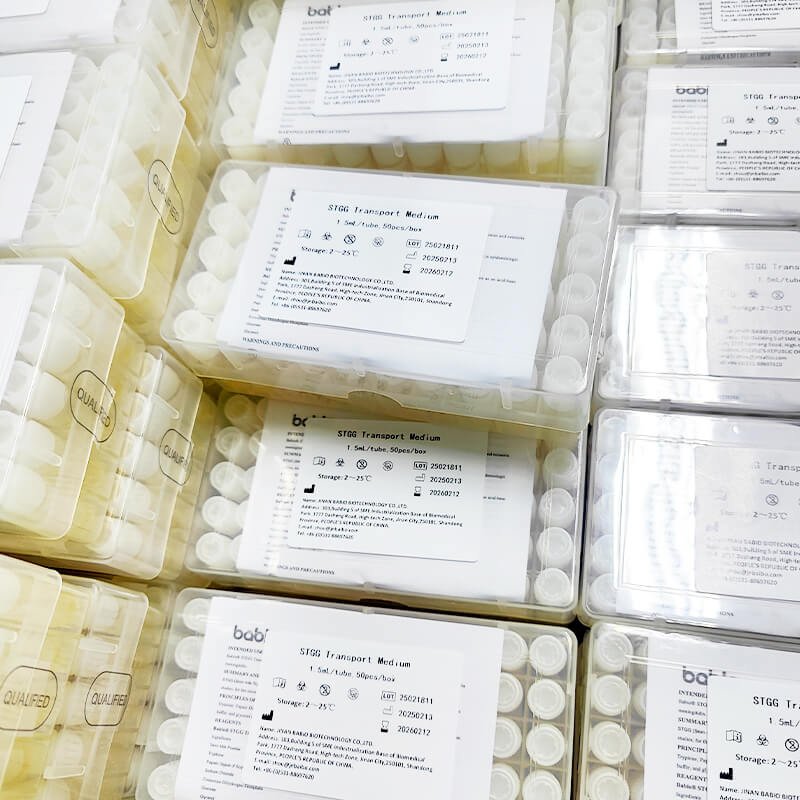
Understanding the Role of Transport Culture Media in Clinical Diagnostics
Reliable clinical diagnostics begin long before a sample reaches the laboratory. Transport Culture Media are specially designed to preserve microorganisms during the period between sample collection and processing. By maintaining viability without allowing excessive growth, these media help ensure accurate and meaningful laboratory results.
At babio, we focus on providing high-quality laboratory solutions that support safe, efficient, and standardized diagnostic workflows worldwide.
What Are Transport Culture Media?
Transport culture media are semi-solid or liquid formulations used to stabilize clinical specimens such as swabs, body fluids, or tissues. Their primary functions include:
- Preserving microorganism viability
- Preventing overgrowth or die-off
- Maintaining sample integrity during storage and transport
- Reducing environmental stress on the pathogen
These media are especially important when immediate inoculation onto culture plates is not possible.
Why Transport Culture Media Matter in Clinical Diagnostics
Accurate diagnosis depends on the quality of the collected specimen. If microorganisms die or multiply uncontrollably during transport, laboratory results may become misleading. Proper media can help:
- Improve detection rates
- Reduce false-negative or false-positive results
- Enhance patient management decisions
- Support infection-control programs
Consistent use of validated transport media strengthens the reliability of microbiological testing.
Key Features of High-Quality Transport Culture Media
When selecting a transport medium, laboratories often look for the following characteristics:
- Balanced formulation to maintain viability
- Stable pH
- Appropriate moisture content
- Clear labeling and batch traceability
- User-friendly packaging for routine clinical use
These features support standardized handling from collection site to laboratory bench.
Best Practices for Using Transport Culture Media
To achieve accurate diagnostic outcomes, attention should be given to:
✔ Correct Sample Collection
Use sterile tools and follow clinical collection guidelines to avoid contamination.
✔ Immediate Placement into Transport Media
Specimens should be inserted into the medium as soon as possible.
✔ Controlled Transport Conditions
Avoid extreme temperatures and follow storage recommendations.
✔ Timely Processing
Transport media help preserve microorganisms — but they are not substitutes for prompt laboratory testing.
Applications in Clinical Settings
Transport culture media are widely used in:
- Microbiological screening and diagnosis
- Public health and disease surveillance
- Hospital infection monitoring
- Routine clinical specimen management
They play an essential role across healthcare environments.
Supporting Quality and Safety
babio remains committed to delivering solutions that support clinical accuracy and patient safety. By applying best practices and high-performance laboratory materials, healthcare teams can improve the reliability of microbiological diagnostics.
📌 Summary
Transport Culture Media are critical tools in maintaining specimen integrity and ensuring accurate laboratory results. Correct selection and usage help safeguard the diagnostic process from the moment a sample is collected.